
01. Measure the new place first — this is the whole game
Before a single box gets packed, get the floor plan of where you are going and the dimensions of its rooms, its closets and its storage. Then measure the furniture you assume is coming with you.
This single step resolves more arguments than anything else in a downsizing, because it converts an emotional question into an arithmetic one. The dining set is not leaving because nobody loves it; it is leaving because the new dining area is nine feet across. Nobody has to be talked out of anything.
Do the same for storage volume. A house with a two-car garage, an attic and three spare closets has perhaps four to six times the storage of a patio home. If you are moving into a third of the storage, roughly two-thirds of what is stored is not coming, and knowing that number before you start is what keeps the process honest.
- Get the new floor plan with room dimensions before packing anything
- Measure the furniture you assume is coming — especially dining sets and bedroom suites
- Count the new storage: closets, garage, attic, exterior shed
- Work out roughly what fraction of current storage you are moving into
02. The order that works: garage, spare rooms, kitchen, then the hard rooms
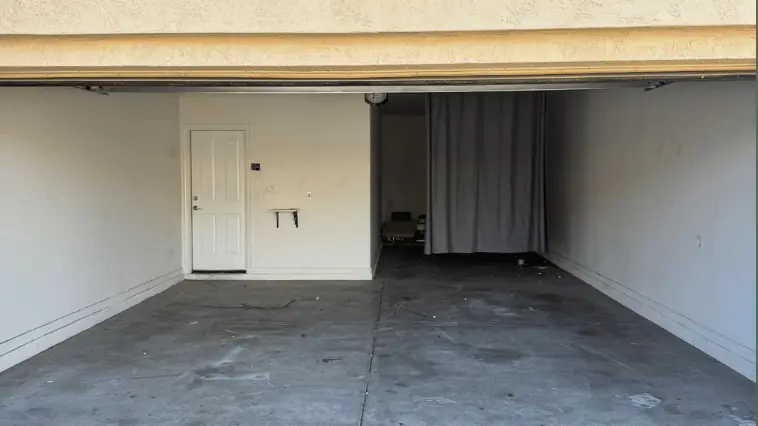
Start in the garage. It holds the most volume, the decisions are the least emotional, and emptying it gives you something a downsizing badly needs — a large staging area inside the house's footprint where sorted items can live without being underfoot.
Then the spare bedrooms and the rooms that have become storage. These are typically full of things belonging to adult children, items kept for a hypothetical future use, and the overflow of thirty years. The decisions here are easier than they look because most of it has not been touched in a decade.
Then the kitchen, which has enormous volume and almost no sentiment attached to the bulk of it — the duplicate pots, the appliances used twice, the dish set for twelve. Only then the living room, the main bedroom and the office, which is where the photographs, the paperwork and the genuinely hard decisions live. By that point you have built the muscle and you know exactly how much space is left.
03. What family members actually want, and how to ask
Nearly every downsizing includes the sentence "the kids will want this." It is worth testing that early, because the answer is usually narrower than expected and finding out late is expensive.
Ask specifically and give a deadline. "Do you want the dining set, and can you collect it by the 20th" produces an answer. "Is there anything you want from the house" produces a vague yes and no collection. Adult children in smaller homes, often in other states, frequently do not want the formal furniture, the china, the crystal or the collections — and the shipping cost on heavy furniture usually exceeds what the item is worth.
Where families do reliably want things: photographs, documents and letters, a small number of specific pieces with a story attached, tools, and jewelry. Plan to handle those carefully and early. Everything else should be tested against a real question with a real date on it, not assumed.
04. Be honest about resale value
This is where downsizings lose months. Items get set aside to sell, listings go up, nothing happens, and the house cannot close because the garage is still full of things waiting for a buyer who is not coming.
What genuinely sells in the East Valley: tools and shop equipment, solid-wood furniture, bicycles and sporting goods in working order, musical instruments, appliances that run, and collectibles with a real market behind them.
What does not sell, regardless of condition or what it cost: china cabinets, formal dining sets, entertainment centers, large armoires, encyclopedias and most books, CRT televisions, exercise equipment more than a few years old, and upholstered furniture generally. These categories have collapsed. Listing them mostly produces silence and delay. If an item will not sell inside the time you have before the move, it is not an asset — it is something you are paying to store.
- Sells: tools, solid wood furniture, bikes, instruments, working appliances, real collectibles
- Does not sell: china cabinets, formal dining sets, entertainment centers, armoires
- Does not sell: books, CRT televisions, dated exercise equipment, most upholstery
- Apply a deadline test — if it will not sell before the move, it is not an asset
05. Donation is the middle path, and it has limits
Between keeping and disposing there is donating, and for a downsizing it absorbs a large share of the volume. Furniture in good condition, usable housewares, clothing, working small appliances and books all have homes in the Valley.
The limits are worth knowing in advance so you are not disappointed on the day. Charities generally will not take upholstered furniture with stains or damage, anything with a strong odor, mattresses, broken items, or large cabinet furniture they cannot move on — and the ones that collect typically need scheduling well ahead and will only take things from the ground floor or the curb.
We donate what is genuinely usable as part of a cleanout rather than defaulting everything to a landfill, and route metals, electronics and mattresses to recyclers. It is worth saying plainly though: a crew arriving for a scheduled job cannot wait while a decision is made about whether something is donatable. That sorting needs to have happened.
06. Where the haul-out fits, and what it costs
The practical shape of most Chandler downsizings is three separate removals rather than one. First a garage and spare-room clearing early in the process, which creates the staging space everything else depends on. Then a mid-process pickup once the kitchen and the sorted rooms have produced their piles. Then a final clearing after the movers have taken what is going, which is when the true leftovers appear.
That last one is the removal people forget to plan for, and it is the one with a deadline attached — usually a close of escrow. Whatever the movers did not take is still in the house, and the house has to be empty. Booking that clearing before you need it is the single most useful piece of scheduling in the whole project.
Pricing is by volume and fixed before anything is loaded: single items from $99, each eighth of our 20-yard trailer at $150, up to $1,299 for a full load. A whole-house downsizing clearing is commonly a half to a full trailer. For estate situations where nobody is in a position to do the sorting at all, we handle the whole clearing rather than the leftovers.
- Measure the new place before packing anything — it turns emotional arguments into arithmetic.
- Work garage first, then spare rooms, then kitchen, then the rooms with memories in them.
- Ask family members about specific items with a specific collection date, not a general invitation.
- Formal dining sets, china cabinets, entertainment centers and upholstery have almost no resale market.
- Plan three removals, and book the post-move final clearing before you need it — that one has a closing date attached.
Common questions
Realistically several weeks of sorting spread across evenings and weekends, not a single push. The removal itself is a day. What determines the total is how quickly decisions get made, which is why the order of rooms matters so much — starting in the garage rather than the living room is usually the difference between finishing and stalling.
Yes. Whole-property clearings where nobody is on site are routine for us, particularly in estate and out-of-state situations. We need clear instruction about what stays, if anything, and access. If there is any chance of valuables or documents in the contents, say so and we will set those aside rather than make the call ourselves.
Where it is genuinely usable, yes — furniture and appliances in good shape go to local Arizona charities, and metals, electronics and mattresses are routed to recyclers rather than straight to landfill. What we cannot do is sort on the day, so the decision about what is donatable needs to be made before the crew arrives.
Those go to your city's household hazardous waste program, not to us. No junk removal company can legally haul paint, solvents, pool chemicals, motor oil or propane. Set them aside at the start of the garage clearing so they do not hold up the rest of it.
Need estate cleanouts in Chandler?
Upfront pricing, insured crews, and we do all the lifting. 5/5 from 170+ neighbors.