
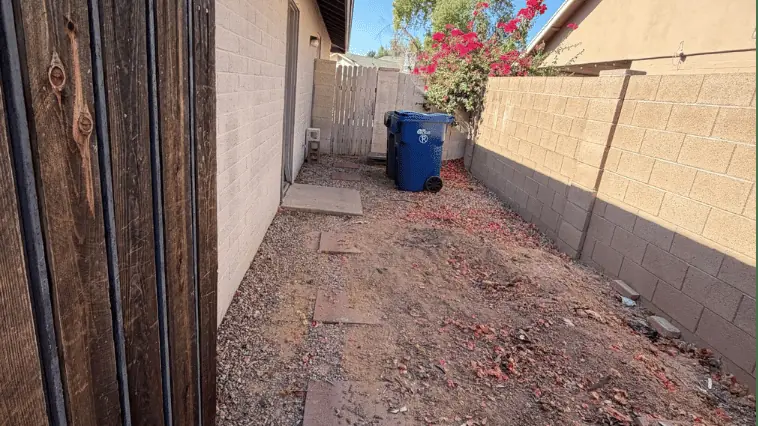
01. Where illegal dumping happens in the Valley
Desert washes on the edges of Mesa, Apache Junction, San Tan Valley, and Queen Creek are common targets because they're often unmonitored and out of sight from main roads. Vacant lots, especially ones in transition between owners, and rural stretches near county land also see recurring dumping. It tends to cluster near city boundaries where enforcement jurisdiction gets murky between municipal and county authority.
02. What actually gets dumped
The most common categories are tires, mattresses, old appliances, and construction debris from unpermitted remodel work. Tires are a particularly persistent problem because they're bulky, don't decompose, and are expensive to dispose of properly at volume, which makes them a repeat offender in dumping statistics across the state.
- Tires — bulky, non-biodegradable, expensive to dispose of legally in volume.
- Mattresses — hard to break down, often abandoned whole.
- Appliances — sometimes contain Freon or other regulated materials.
- Construction debris — drywall, lumber, and shingles from unpermitted work.
- Household furniture — couches and mattresses left at the edge of desert land.
03. The real environmental cost in a desert ecosystem
Desert washes aren't empty land — they're drainage channels that carry monsoon runoff, and dumped debris in a wash can block flow, contribute to flooding, and leach contaminants directly into water that eventually reaches groundwater recharge areas. Arizona's arid climate also means dumped material doesn't break down the way it might in a wetter region — a mattress or tire pile can sit largely intact for years, an eyesore and hazard the whole time.
There's a wildlife dimension too. Debris piles attract pests and create standing-water hazards after monsoon rain, and native desert vegetation, already slow-growing, gets damaged or crushed under dumped material in a way that takes far longer to recover than in faster-growing ecosystems.
04. Why it's a bigger problem than people assume
Illegal dumping often gets dismissed as a minor nuisance, but the cleanup burden falls on municipal and county budgets, diverting resources from other services. It's also a repeat-offense pattern — one dumped pile tends to attract more, since an already-trashed spot lowers the perceived barrier for the next person driving by with a truck bed full of debris.
05. The legal risk isn't hypothetical
Illegal dumping carries real fines in Arizona, and enforcement has increased in several Valley municipalities as complaints have grown. Beyond the fine itself, cleanup costs can sometimes be billed back to the responsible party if identified, particularly for larger commercial-scale dumping like unpermitted construction debris.
06. What to do instead when disposal feels like a hassle
The frustrating irony is that legal disposal is rarely much harder than illegal dumping — it just requires a little planning. City bulk trash programs, donation centers, and licensed hauling all handle the exact same categories of items that end up dumped in washes, usually for a comparable or lower total effort than driving out to a remote spot and hoping nobody sees.
For anyone doing a DIY cleanout, checking your city's bulk trash calendar or booking a same-day full-service pickup both beat the legal and environmental risk of a wash dump by a wide margin. We run same-day pickups across the East Valley specifically because most illegal dumping happens out of impatience, not malice — people just want the junk gone that day.
- Desert washes are drainage channels — dumping in them can worsen monsoon flooding and contaminate groundwater recharge areas.
- Arizona's arid climate means dumped debris doesn't break down quickly, unlike in wetter regions.
- One dumped pile tends to attract more, lowering the perceived barrier for repeat dumping nearby.
- Illegal dumping carries real fines and, in commercial cases, potential cleanup cost liability.
- Legal disposal options are rarely much harder than illegal dumping once you know the right channel.
Common questions
Yes, several municipalities have increased enforcement and camera monitoring at known dumping spots in response to rising complaints, and fines are a real risk, not just a technicality.
They're often unmonitored, out of sight from main roads, and sit at the edge of city jurisdiction where enforcement responsibility can be unclear, making them an easy target.
A same-day full-service junk pickup handles most of what typically gets illegally dumped — mattresses, appliances, furniture — usually within hours of calling.
Yes, tires don't biodegrade, collect standing water that attracts mosquitoes, and are difficult and costly to dispose of properly at volume, which makes them one of the most commonly dumped items statewide.
Rules vary by municipality, but property owners are sometimes still responsible for clearing dumped debris even if they didn't put it there, so reporting it quickly to the city is worth doing.
Need junk removal in Apache Junction?
Upfront pricing, insured crews, and we do all the lifting. 5/5 from 170+ neighbors.