
01. Why heavy debris is priced differently
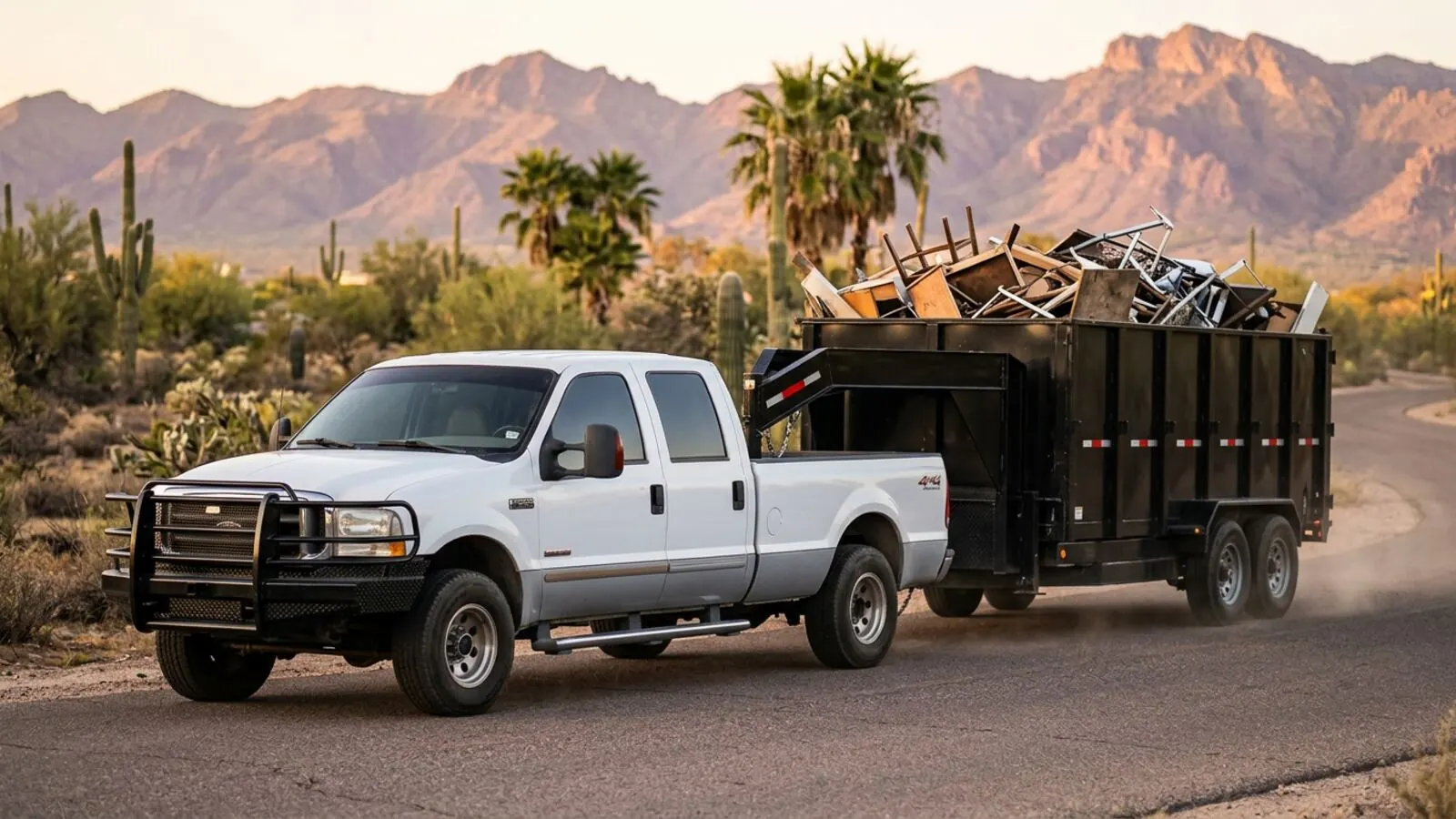
Trucks have legal weight ratings, and those ratings are not advisory. Exceeding them is unsafe, damages equipment and is a violation. So for dense material, the limit that binds is weight, not the space in the bed — a load stops when the scale says so, usually with the truck looking far from full.
Disposal works the same way. Landfills and transfer stations charge dense material by the ton, and clean fill, mixed soil, rock and concrete are often routed to different facilities with different rates. Clean fill dirt with no debris in it sometimes has a disposal path; soil mixed with roots, trash, plastic sheeting or construction debris generally does not and costs more.
That is why we quote heavy material after seeing it rather than off a flat rate. What we need to estimate is roughly how many cubic yards you have, what the material actually is, whether it is clean or mixed, and whether equipment can reach it or it has to be moved by wheelbarrow.
- Approximate cubic yards of material
- Material type — soil, decomposed granite, landscape rock, concrete, mixed
- Whether it is clean or contaminated with roots, trash or construction debris
- Access — can a truck or small loader reach it, or is it wheelbarrow-only
- Whether it is loose and piled or still in place and needing excavation
02. What this material actually weighs
The numbers surprise people, so it is worth stating them plainly. A cubic yard of dry soil runs roughly 2,000 to 2,200 pounds — about a ton. Wet soil is heavier, often 2,700 pounds or more, because water adds substantial weight. Decomposed granite and landscape rock land in a similar range, generally 2,400 to 2,800 pounds per cubic yard depending on size and moisture. Broken concrete is the heaviest common material, around 3,500 to 4,000 pounds per cubic yard.
To make that concrete: a 10 by 10 foot area of landscape rock three inches deep is about one cubic yard — roughly 2,500 pounds. A modest front yard rock removal, say 400 square feet at three inches, is around four cubic yards and comfortably over five tons. That is not a wheelbarrow weekend, and it is well beyond what a pickup should carry.
This is also why the pile in your driveway is deceiving. Five tons of rock occupies a surprisingly small footprint. People look at it, think it does not seem like much, and are genuinely shocked by the removal quote — not because the quote is high, but because the material is heavier than any intuition suggests.
03. The jobs this comes up on
Rock-to-turf conversions are the most common by far. Homeowners across Mesa, Chandler and Gilbert pulling out decades-old granite yards to put in artificial turf or low-water landscaping generate several tons of rock that has to go somewhere, and the landscaper often quotes installation without including haul-away of the existing material.
Pool removals and backfill corrections produce large volumes of soil. Trenching for irrigation, drainage or utilities produces spoil that does not all go back in the trench. Demolition of a slab, walkway, patio or block wall produces concrete and masonry, which is the densest category of all. Grading corrections, where a yard is re-sloped for drainage, generate whatever the grade change removes.
There is also the slow-accumulation version: the corner of the side yard where a previous owner piled rock, broken pavers, and the remains of three projects. Those are usually mixed material, which complicates disposal routing but is very satisfying to finally clear.
04. Can you give rock away instead?
Sometimes, and it is worth trying before paying to remove it. Clean landscape rock in consistent size and color has genuine demand. Listing it free to anyone who will load and haul it works reasonably often, particularly for larger decorative rock and clean river rock.
The constraints are real though. The taker has to load it themselves, which is heavy manual work most people underestimate and abandon partway through. The rock needs to be reasonably clean — rock full of weeds, roots, old landscape fabric and dirt is a much harder sell. And you are depending on a stranger to finish a job they volunteered for, which does not always happen.
Clean fill dirt has a similar market. Builders and homeowners sometimes need fill for grading, and there are local listings where fill gets matched to people who want it. Again, clean is the operative word — fill with debris in it is not wanted. If you have time and the material is clean, try it. If you are on a project deadline, do not build the schedule around a stranger with a trailer.
05. Access determines a lot of the cost
With heavy material, how far it has to travel by hand is often the biggest cost factor after weight. Material in an open front yard where a truck can back up to it is straightforward. The same material in a walled backyard reachable only through a 36-inch side gate has to be wheelbarrowed out one load at a time, and a cubic yard is a lot of wheelbarrow trips.
If there is an RV gate or a double gate, say so — it can meaningfully change the approach and the price, because a small loader or a dumpable buggy may be able to get in. Where equipment can reach the pile, the job gets dramatically faster.
Surface protection matters too. Driving equipment across a lawn, pavers or a decorative concrete driveway risks damage, and sometimes the right answer is to protect the surface or accept a longer carry. Worth discussing before the day rather than after a paver cracks.
06. When you want a different solution
For very large volumes of clean fill or rock — the kind generated by a full-yard conversion or a pool fill — a dedicated dump trailer or a contractor who specializes in material hauling may be a better fit than a junk removal crew, and we will tell you that rather than quote you something that does not serve you.
If the material is still in place and needs excavating rather than just loading, that is grading and excavation work with its own equipment. We remove material; we are not a grading contractor. Knowing which problem you actually have saves everyone time.
Where we fit well is the middle of the range: a few cubic yards up to a moderate volume, material that is already loose or easy to load, mixed material that needs sorting and routing to the right disposal stream, and jobs that combine heavy material with general debris — a demo cleanup with concrete, old fencing, plant material and general junk all mixed together. That mixed scenario is exactly what a crew and a sorted load handle well.
- Dirt, gravel and rock are priced by weight, not volume, so a truck leaves looking far from full because it has hit its legal limit.
- A cubic yard of soil is roughly a ton; landscape rock is 2,400 to 2,800 pounds; broken concrete runs 3,500 to 4,000 pounds.
- A 400 square foot rock yard at three inches deep is about four cubic yards — over five tons of material.
- Clean rock and clean fill can often be given away, but material with weeds, roots, fabric or debris in it is a much harder sell.
- Access drives cost after weight — an RV gate that lets equipment reach the pile changes the job substantially.
Common questions
Yes, and it is quoted after assessment rather than from a flat rate because heavy material is priced by weight rather than volume. We need to know the approximate cubic yards, the material type, whether it is clean or mixed with roots and debris, and whether equipment can reach it or it is wheelbarrow-only.
Generally 2,400 to 2,800 pounds per cubic yard depending on rock size and moisture. Dry soil runs about 2,000 to 2,200 pounds per yard and wet soil considerably more. Broken concrete is heaviest at roughly 3,500 to 4,000 pounds per cubic yard.
Because trucks have legal weight ratings and dense material hits them long before the bed is full. Overloading is unsafe, damages equipment and is a violation. Disposal facilities also charge heavy material by the ton and route clean fill, mixed soil and concrete to different places at different rates.
Often yes, if it is clean and reasonably consistent. Listing it free to whoever loads and hauls it works fairly well for decorative and river rock. The catch is that the taker has to do genuinely heavy manual loading, and rock full of weeds, roots and old landscape fabric is much harder to give away. Do not build a project deadline around it.
Usually, yes. Material behind a standard 36-inch side gate has to be wheelbarrowed out load by load, and a single cubic yard is many trips. If you have an RV gate or double gate that lets a small loader or dump buggy reach the pile, mention it — it can change the approach and the price significantly.
That is grading and excavation work with different equipment, and a grading contractor is the right call. We remove material that is loose or easy to load. Where we fit best is a few cubic yards up to moderate volumes, and especially mixed demolition cleanups where concrete, fencing, plant material and general debris all need sorting and routing.
Need junk removal in Mesa?
Upfront pricing, insured crews, and we do all the lifting. 5/5 from 170+ neighbors.