
01. The three categories most HOA junk rules fall into
Nearly every East Valley HOA's CC&Rs address junk and clutter through some combination of visible-storage restrictions, vehicle and equipment parking limits, and general maintenance standards. Visible-storage rules typically restrict what can be seen from the street or a neighboring yard — furniture, appliances, construction materials. Parking and equipment rules govern trailers, RVs, and work vehicles. Maintenance standards are the broadest, covering general upkeep of the property's exterior appearance.
Reading your specific CC&Rs is worth the twenty minutes it takes, since some communities are stricter than others — a few Queen Creek and Gilbert master-planned communities have specific clauses about garage door usage that older, established neighborhoods don't.
02. What's usually fine
Not every HOA is looking to fine you for normal household activity. Generally acceptable, based on what we see across East Valley communities:
- A donation pile staged for a scheduled same-day or next-day pickup.
- A moving pod or short-term storage unit for a defined period specified in most CC&Rs.
- Normal yard equipment stored in a garage or behind approved fencing.
- Trash and recycling bins out only on collection day, brought in the same evening.
- A brief period of construction materials during an approved home improvement project.
03. What typically causes problems
The line usually gets crossed with duration and visibility, not the activity itself. A donation pile sitting for a week instead of a day, a work trailer parked well beyond a project's completion, or trash bins left out for days past collection are the common triggers.
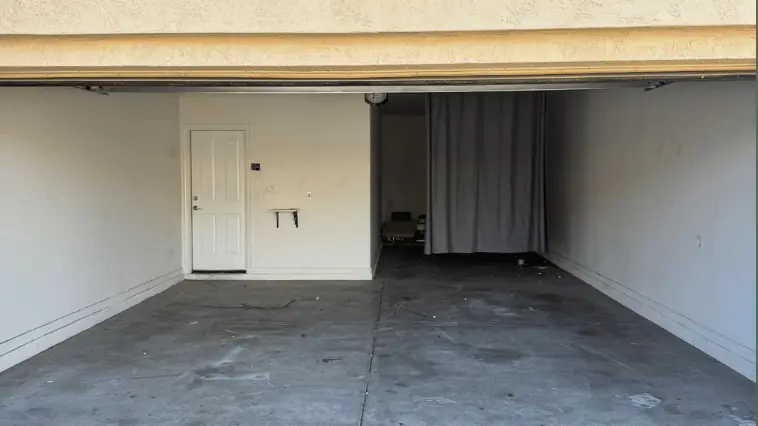
Garage cleanouts in progress are a specific risk point — if you're mid-project and the garage door is open with a visibly cluttered interior for multiple days, that's enough to draw a complaint in some communities, especially ones with strict architectural committees.
04. How management companies typically enforce these rules
Enforcement usually starts with a drive-by inspection or a resident complaint, followed by a courtesy notice with a compliance window. The exact process and timeline differs by community and management company, so check your specific HOA's enforcement policy rather than assuming a universal standard.
What's fairly consistent across the East Valley is that a second violation escalates faster than the first, and unresolved violations can eventually affect things like architectural approval requests or, in rare cases, liens. It's worth taking a first notice seriously rather than assuming it'll blow over.
05. Staying ahead of it during a cleanout
The simplest approach for anyone doing a bigger cleanout in an HOA community is to compress the visible window as much as possible. Rather than staging items outside for days while you sort through them, sort inside the garage first and schedule a single pickup for everything at once.
If you're using a rented dumpster or trailer, confirm your community's allowed parking duration before it's delivered — most East Valley HOAs cap it well under a week, and some are as short as 48 to 72 hours.
06. When to just call a crew instead of managing it yourself
If a cleanout is big enough that it's going to take more than a day or two of visible staging to sort through, it's usually faster and lower-risk to bring in a crew for a single-visit pickup rather than trying to manage the timeline yourself around HOA restrictions.
- Most East Valley HOA junk rules fall into visible-storage, parking/equipment, and general maintenance categories.
- Duration and visibility, not the activity itself, are usually what trigger a violation.
- Trailers and dumpsters often have shorter allowed parking windows than homeowners assume — confirm before delivery.
- A second violation typically escalates faster than the first, so early compliance matters.
- Compressing a cleanout into a single pickup instead of days of visible staging is the safest approach in HOA communities.
Common questions
If it sits for an extended period rather than being staged for a same-day or next-day pickup, yes — most communities treat prolonged outdoor storage as a violation regardless of intent.
It varies by community — many CC&Rs specify a defined period, often measured in weeks rather than months. Check your specific HOA's governing documents for the exact limit.
Primarily outdoor and visible spaces, but a garage with the door left open on a visibly cluttered interior for multiple days can still draw a complaint in some East Valley communities.
Sort inside the garage first, then schedule a single pickup for everything at once rather than staging items outside for multiple days while you sort.
No — enforcement processes and specific rules vary by community and management company. Always check your specific HOA's CC&Rs and enforcement policy rather than assuming a universal standard.
Need junk removal in Gilbert?
Upfront pricing, insured crews, and we do all the lifting. 5/5 from 170+ neighbors.