
01. What actually triggers a violation notice
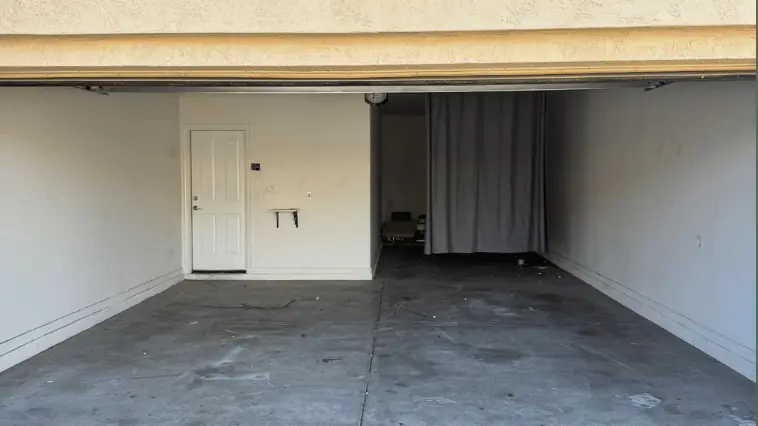
Most East Valley HOAs — and this holds across Val Vista Lakes, Power Ranch, and the newer Queen Creek master-planned communities — don't send inspectors looking for junk specifically. Violations get triggered by visibility. A dead appliance in the driveway, furniture staged for donation pickup that sits three days too long, or a garage door left open on a stacked interior are the most common triggers we see.
Trailers and roll-off dumpsters are their own category. Many communities cap how many consecutive days a dumpster or trailer can sit in a driveway, and it's usually shorter than people expect — sometimes just 48 to 72 hours. If you're doing a DIY cleanout with a rented dumpster, check your CC&Rs before you schedule the drop-off.
02. The typical notice-to-fine timeline
Every HOA's process is a little different, so check your specific community's CC&Rs and management company for exact numbers rather than assuming a standard timeline. Generally, though, most East Valley communities follow a similar shape: a courtesy notice first, a compliance deadline of roughly one to two weeks, then an escalating fine if nothing changes.
The fastest way to lose that window is to assume you have more time than you do, or to assume the notice will just go away. HOA management companies track compliance closely, and a second notice usually comes with a shorter deadline and a real dollar figure attached.
03. What counts as a violation (and what usually doesn't)
Not everything visible from the street is a violation — normal yard equipment, a car in the driveway, or a short-term moving pod usually aren't flagged. What typically is:
- Furniture or appliances stored outside for more than a few days.
- Construction debris left visible after a home project.
- Trailers, dumpsters, or roll-offs parked beyond the community's allowed window.
- Overflowing trash or recycling bins left out past collection day.
- Garage doors left open on visibly cluttered or hoarding-condition interiors.
04. How to clear a violation fast
Once you've got a notice, the fastest path is usually a same-day or next-day full-service pickup rather than trying to handle it piece by piece. Trying to break down a violation over several weekend trips to the dump often means the visible clutter is still there when the compliance deadline hits.
If the volume is more than a single trip — a garage cleanout tied to the same complaint, for example — call ahead and explain the deadline. Most crews, us included, can prioritize a compliance-driven job because the timeline is fixed and non-negotiable in a way a normal cleanout isn't.
05. Preventing the next notice
The homes that never get a second notice usually have one habit in common: nothing sits outside longer than a day or two, whether it's a donation pile, a dead appliance waiting for pickup, or moving boxes. If something needs to go, schedule the pickup the same week you set it aside rather than letting it become a fixture in the driveway.
For anyone doing regular garage or yard work, it's worth keeping a standing relationship with a junk removal company rather than scrambling each time. A quick text with a photo gets you a quote fast enough to clear something before it becomes visible long enough to matter.
06. When the violation involves a neighbor dispute
Sometimes a violation notice follows a neighbor complaint rather than a routine inspection, and those situations can get tense fast. Whatever the backstory, the practical fix is the same — clear the visible issue quickly and keep any correspondence with the HOA in writing so there's a record of when compliance happened.
- Most HOA junk violations in the East Valley are triggered by visibility, not volume — a single visible item can trigger a notice.
- Trailers and dumpsters often have shorter allowed driveway windows than homeowners expect — check CC&Rs before renting one.
- Compliance deadlines are usually one to two weeks after a first notice, with fines escalating from there.
- A single full-service pickup clears a violation faster and more reliably than multiple DIY dump trips.
- Keeping nothing outside longer than a day or two prevents most violations before a notice is ever issued.
Common questions
It varies by community, but many East Valley HOAs give one to two weeks after a first notice before fines begin. Check your specific CC&Rs or management company for your community's exact timeline.
Yes — most communities cap how many consecutive days a trailer or dumpster can sit in a driveway, often just 48 to 72 hours. Confirm your community's rule before scheduling a rental.
It can, if the interior is visibly cluttered or hoarding-condition and visible from the street or a neighboring property. Most notices in this category follow a specific complaint.
Many East Valley jobs tied to an HOA deadline can be scheduled same-day or next-day. Call ahead and mention the compliance deadline so it can be prioritized.
Most HOAs have an appeal or hearing process outlined in their governing documents. It's worth requesting that in writing while also clearing the visible issue in case the appeal doesn't succeed in time.
Need junk removal in Gilbert?
Upfront pricing, insured crews, and we do all the lifting. 5/5 from 170+ neighbors.